Transaction Networks Connect Live Dealer Tables to Tiered Player Advancement Systems

Live dealer environments operate through streamed video feeds that link remote participants to physical tables staffed by real croupiers, while tiered accumulation pathways track cumulative activity to unlock successive reward levels. Provider-driven transaction networks serve as the connective layer that processes deposits, records play metrics, and updates progression data without interruption. Observers note that these networks allow operators to synchronize live game participation directly with loyalty tracking mechanisms across multiple platforms.
Core Mechanics of Integration
Payment processors handle incoming funds from various sources and route portions of each transaction into dedicated tracking ledgers maintained by game providers. Data flows from the live dealer platform into central servers that calculate points based on wager volume, session duration, and game type. Researchers at institutions studying digital entertainment markets have documented how these automated handoffs reduce latency between a completed bet and the corresponding tier update. In May 2026 several major studios reported expanded API connections that permit instant recognition of live roulette or blackjack contributions toward higher status brackets.
Role of Specialized Providers
Transaction specialists such as those supplying backend infrastructure for European operators maintain dedicated modules that tag live table activity separately from automated games. This separation enables precise allocation of rewards, including cashback percentages and exclusive event invitations reserved for advanced tiers. Figures from industry reports compiled by the European Gaming and Betting Association indicate that integrated systems now cover more than 60 percent of live dealer traffic in regulated markets outside the United Kingdom.
Operators deploy these networks to maintain continuous momentum for participants who move between live tables and other offerings. When a player deposits during a live session, the transaction network registers the action, applies any applicable multipliers, and pushes the updated balance to both the game interface and the loyalty dashboard simultaneously. This dual recording prevents discrepancies that previously required manual reconciliation.
Accumulation Pathways Across Live Formats
Tier structures typically begin with entry-level status granted upon first verified deposit processed through the network. Subsequent levels require cumulative spend thresholds met across live blackjack, baccarat, and roulette tables. Providers embed conditional logic that recognizes qualifying wagers only when they originate from authenticated live streams, thereby directing accumulation specifically toward live dealer dynamics rather than random number generator equivalents.
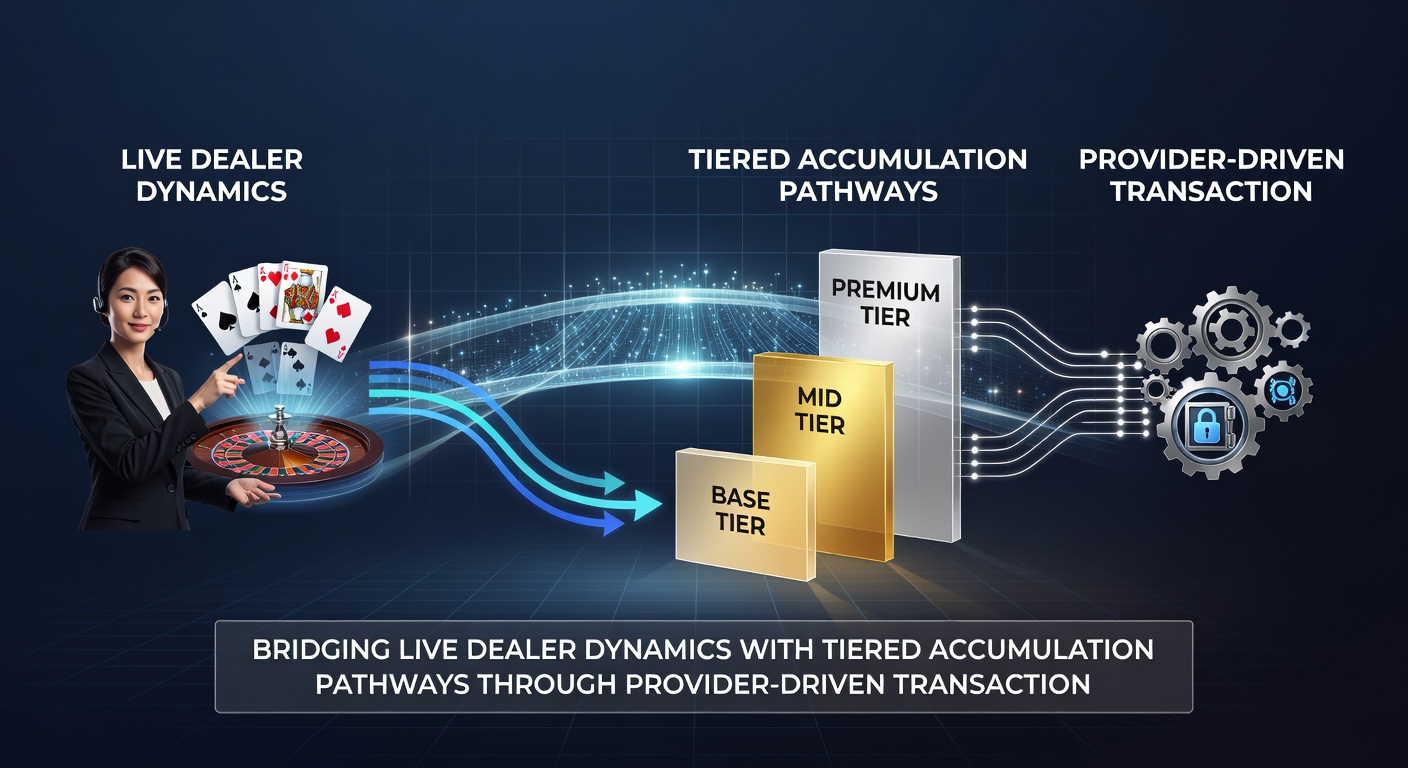
One documented case involves a Canadian operator that linked its payment gateway to a tier engine supplied by a third-party studio, resulting in measurable increases in average session length for live games during the first quarter of 2026. The same configuration allows players who reach mid-tier status to receive real-time notifications of available table limits or reserved seating in upcoming live events.
Regulatory Context and Data Handling
Authorities in multiple jurisdictions require transaction networks to maintain detailed audit trails that separate live dealer contributions from other categories. Australian research centers tracking responsible gambling metrics have examined how these records support verification of tier eligibility without exposing personal financial details beyond necessary operational parameters. According to data released through the Nevada Gaming Control Board archives, similar frameworks operating in the United States emphasize timestamp accuracy and cross-platform reconciliation as core compliance elements.
Transaction networks also accommodate multi-currency environments by converting deposits into standardized units for accumulation calculations, then converting rewards back into the player’s preferred denomination at the point of redemption. This currency-agnostic approach supports international participation while preserving the integrity of tier thresholds set by each operator.
Future Developments in Network Architecture
Developers continue to refine protocols that embed loyalty logic deeper within live dealer software stacks. Upcoming releases scheduled for late 2026 aim to introduce predictive tier forecasting based on historical transaction patterns, allowing the system to suggest optimal deposit amounts that would advance a participant to the next level before a session ends. These enhancements rely on the same provider networks already handling real-time fund movement and status synchronization.
Interoperability standards emerging from collaborative working groups now permit live dealer feeds from one studio to feed directly into tier systems operated by unrelated payment providers, expanding the range of eligible games without requiring operators to rebuild their backend infrastructure. Observers tracking these shifts report that such flexibility reduces implementation timelines from several months to a matter of weeks.
Conclusion
Provider-driven transaction networks function as the operational backbone that aligns live dealer participation with structured accumulation pathways. By processing payments, recording activity, and updating tier status in unified data streams, these systems create continuous linkage between table play and reward progression. Documentation from regulatory bodies and industry associations confirms that the technical architecture supporting these connections continues to evolve toward greater speed and cross-platform compatibility through 2026 and beyond.