Game Developer Partnerships Crafting Layered Promotion Sequences for Cross-Device Progressive Play
Foundations of Developer Collaboration in Progressive Gaming
Game developers form partnerships to integrate promotion sequences across mobile, desktop, and console platforms where progressive elements advance through player activity, and these alliances allow studios to synchronize bonus structures, reward tiers, and feature unlocks without device-specific interruptions. Data from industry reports shows that such collaborations increased by 35 percent between 2023 and 2025 according to figures released by the American Gaming Association, while cross-device sessions now represent over 60 percent of total engagement in major markets.
Designing Layered Promotion Sequences
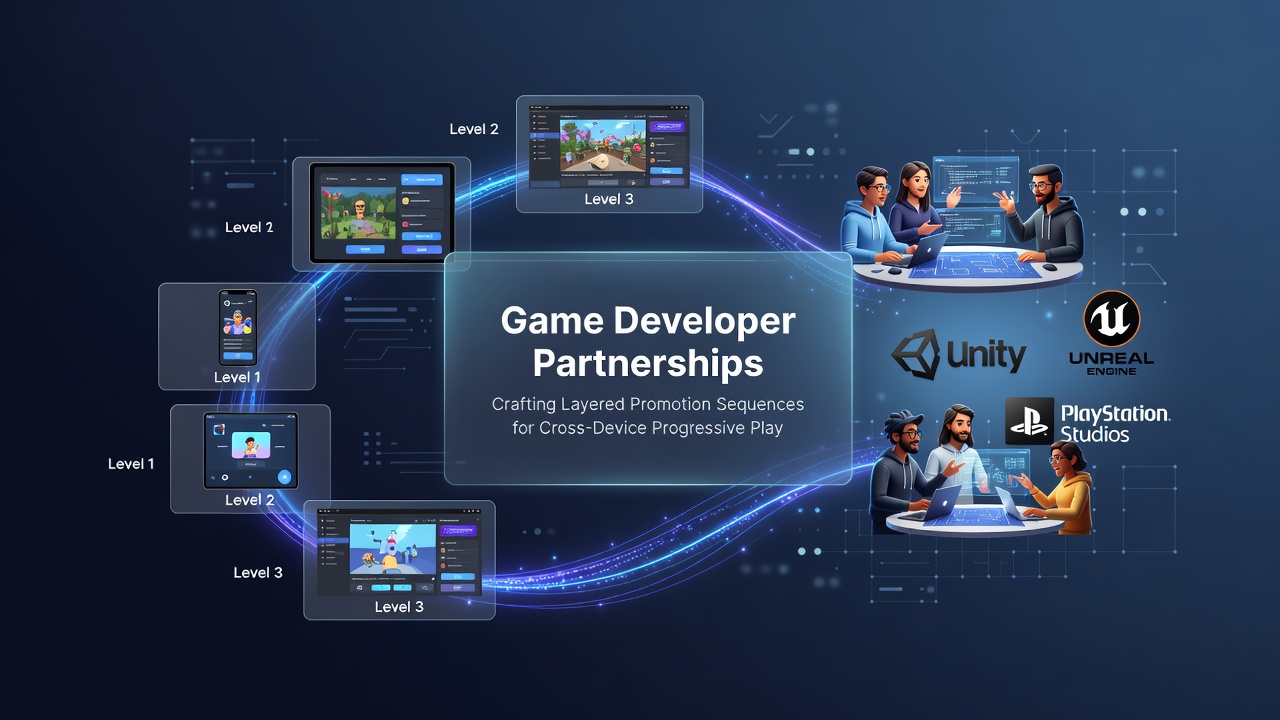
Layered sequences begin with entry-level incentives such as initial deposit matches that trigger on any device, then escalate to mid-tier free spin allocations tied to cumulative playtime or wager volume, and finally unlock high-value progressive contributions that carry forward regardless of platform switches. Studios coordinate these layers through shared APIs and data frameworks that track player progress in real time, ensuring that a bonus initiated on a smartphone continues seamlessly when the same account loads on a desktop client. One study from the University of Nevada's gaming research division documented how these synchronized sequences reduced drop-off rates by 22 percent during multi-device sessions.
Technical Integration Across Platforms
Partnerships emphasize standardized data protocols that enable progressive meters and promotion states to persist across operating systems, and developers implement cloud-based player profiles that update instantaneously when a user transitions between environments. This approach requires joint testing cycles where teams from multiple studios validate feature continuity, payment integrations, and reward redemptions under varied network conditions. In June 2026 several major alliances announced expanded testing frameworks for 5G and emerging Wi-Fi 7 standards to support uninterrupted progressive accumulation during high-mobility play.
Case Examples of Recent Partnerships
Take one collaboration between European and North American studios that launched a shared progressive title in early 2025, where players accumulated points toward tiered promotions while switching between tablet and PC versions without resetting their status. Another alliance involving Australian developers integrated live tournament elements into the promotion ladder, allowing participants to earn additional layers of rewards based on cross-device leaderboard performance. Observers note that these projects rely on unified backend systems rather than device-specific builds, which simplifies compliance with regional requirements from bodies such as iGaming Ontario.

Regulatory Considerations and Data Standards
Partnerships must align with diverse regulatory frameworks that govern player data handling, bonus transparency, and progressive jackpot contributions, and teams often reference guidelines from multiple jurisdictions including those outlined by the Australian Communications and Media Authority. Shared compliance modules within these alliances reduce duplication of effort while maintaining audit trails for each promotion layer. Research indicates that coordinated reporting mechanisms improve accuracy in tracking cross-border player activity, which supports responsible gaming measures without fragmenting the user experience.
Future Directions in Promotion Architecture
Developers continue to explore AI-assisted prediction models that anticipate when players might switch devices and pre-load relevant promotion states accordingly, and these models draw on aggregated anonymized data sets to refine sequence timing. Partnerships also examine integration with emerging hardware such as foldable screens and wearable interfaces, where additional promotion layers could activate based on contextual inputs like location or session duration. Evidence from pilot programs suggests these advancements maintain continuity while expanding the number of accessible reward pathways.
Conclusion
Game developer partnerships have established structured methods for building layered promotion sequences that function consistently across devices, supported by technical standards, shared compliance tools, and ongoing platform testing. These arrangements enable progressive features to advance without interruption while meeting requirements from various regulatory regions, and continued collaboration points toward further refinement in sequence design and data integration as hardware and connectivity evolve.